Wednesday, March 21, 2012
Finally, here's some music!
Here's a 30-second clip of a tune I came up with that we could use as part of the Star-Crossed production or elsewhere! It isn't perfect recording, but I think it sounds kind of mysterious/beautiful & could be used at a part where there is magic being used--maybe where Puck is forgetting his love because it's kind of bittersweet.

Strange Ending for a Comedy
It seems that I wasn't the only one thrown off by the strange twist of events at the end of Love's Labour's Lost; it was so weird & it didn't really seem to be consistent with the rest of the play. That and the fact that this play was so much shorter than what I'm used to from Shakespeare made me wonder if this wasn't just an unfinished play--But it was published in 1598, in the middle of Shakespeare's career.
That question made me think, though, that if any group is having trouble coming up with an ending for their play, it might be because it was unfinished at the time of Shakespeare's death.
That question made me think, though, that if any group is having trouble coming up with an ending for their play, it might be because it was unfinished at the time of Shakespeare's death.
Wednesday, March 14, 2012
Love's Labour & the Lost Plays
I've been reading Love's Labour's Lost out of my roommate's book of the complete works of Shakespeare, and it had an editor's preface that gave some interesting information. I thought we could gain some clues about our lost & found plays from some of the things that were mentioned about the play. Let me just quote a paragraph from the preface* (see end of post for citation):
"The 1598 edition of Love's Labour's Lost is the first play text to carry Shakespeare's name on the title-page, which also refers to performance before the Queen 'this last Christmas'. The play is said to be 'Newly corrected and augmented', so perhaps an earlier edition has failed to survive. Even so, the text shows every sign of having been printed from Shakespeare's working papers, since it includes some passages in draft as well as in revised form."

...and later on, it says that while the names of the King's friends seem to have been taken from contemporary French leaders, the plot itself looks like it was invented by Shakespeare--so we can see that he didn't always copy existing stories.
Do we have any drafts of the plays we've recovered? Is there reference to an event, such as performing before the queen, that would give us clues as to when the plays were written? Do any of the plays include "foul paper" (prompts which actors used to produce the play, since printing didn't happen until after the plays were produced: see Plays and the Globe Theater)?
With other research (see here), I found that since there were no copyright laws in the Elizabethan era, some publishers would send people to sit in at plays and record them so they could essentially steal the profits--does it look like any of these plays had that happen, based on publisher information and date of publication? (Only 18 known plays were published like this during Shakespeare's lifetime. I'll try to find out whether these unauthorized publications still listed Shakespeare as the author so that we have a better understanding.)
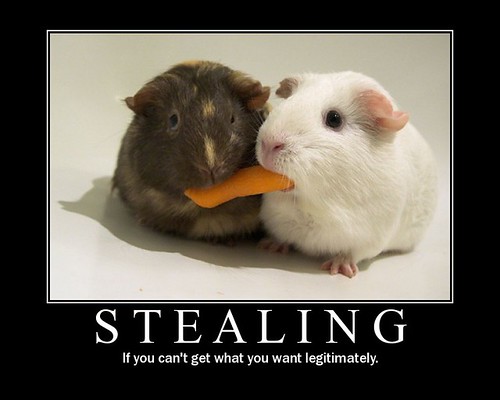
 One last thing: at the same site given in the above link, I learned that in Shakespeare's time, plays had to be registered before they were published since it allowed for censorship of too liberal political and religious views. Maybe our plays escaped publication by the normal means due to questionable content that was too free-speaking against the crown or some social issue.
*Wells, Stanley and Gary Taylor. Introduction. William Shakespeare: The Complete Works: Love's Labor's Lost. By William Shakespeare. Oxford: Clarendon Press, 1991. 279. Print.
"The 1598 edition of Love's Labour's Lost is the first play text to carry Shakespeare's name on the title-page, which also refers to performance before the Queen 'this last Christmas'. The play is said to be 'Newly corrected and augmented', so perhaps an earlier edition has failed to survive. Even so, the text shows every sign of having been printed from Shakespeare's working papers, since it includes some passages in draft as well as in revised form."
...and later on, it says that while the names of the King's friends seem to have been taken from contemporary French leaders, the plot itself looks like it was invented by Shakespeare--so we can see that he didn't always copy existing stories.
Do we have any drafts of the plays we've recovered? Is there reference to an event, such as performing before the queen, that would give us clues as to when the plays were written? Do any of the plays include "foul paper" (prompts which actors used to produce the play, since printing didn't happen until after the plays were produced: see Plays and the Globe Theater)?
With other research (see here), I found that since there were no copyright laws in the Elizabethan era, some publishers would send people to sit in at plays and record them so they could essentially steal the profits--does it look like any of these plays had that happen, based on publisher information and date of publication? (Only 18 known plays were published like this during Shakespeare's lifetime. I'll try to find out whether these unauthorized publications still listed Shakespeare as the author so that we have a better understanding.)
One last thing: at the same site given in the above link, I learned that in Shakespeare's time, plays had to be registered before they were published since it allowed for censorship of too liberal political and religious views. Maybe our plays escaped publication by the normal means due to questionable content that was too free-speaking against the crown or some social issue.*Wells, Stanley and Gary Taylor. Introduction. William Shakespeare: The Complete Works: Love's Labor's Lost. By William Shakespeare. Oxford: Clarendon Press, 1991. 279. Print.
Wednesday, March 7, 2012

Getting into the Meleager Idea
After looking up Meleager on Wikipedia (I know, my high school English teachers would have been so disappointed!), I think we could get a lot of things out of this story. Here are some quick ideas:
Some clown talking about the Calydonian boar could crack a joke about it becoming drunk--since it's always trampling the vines & all. He could also crack jokes about the centaurs & maybe the girl they try to rape. (Horrible, I know, but that is something Shakespeare often does--make fun of serious things. That's kind of one of the definitions of humor.)
There could be a really cool speech or even a motif throughout the play about fire, since the fates said that Meleager would die when fire consumed a branch burning in the hearth, plus it deals with gods, and fire is always associated with deity.
The whole story is very workable in regard to Shakespeare's style.
Some clown talking about the Calydonian boar could crack a joke about it becoming drunk--since it's always trampling the vines & all. He could also crack jokes about the centaurs & maybe the girl they try to rape. (Horrible, I know, but that is something Shakespeare often does--make fun of serious things. That's kind of one of the definitions of humor.)
There could be a really cool speech or even a motif throughout the play about fire, since the fates said that Meleager would die when fire consumed a branch burning in the hearth, plus it deals with gods, and fire is always associated with deity.
The whole story is very workable in regard to Shakespeare's style.
A Miranda character
The individual play I read was As You Like It, and I thought that we should bring in a character like Duke Senior (who is from that play), or like Miranda from The Tempest--someone who appeals to the more idyllic personality traits of audience members (such as sweetness, respect, wisdom, and virtue). Shakespeare does this a lot; he's got admirable and sometimes tender characters in many plays whom his audience loves for their general goodness: consider Ophelia (from Hamlet) and Banquo (from Macbeth) as well as those I listed above. Here are some lines by Duke Senior from As You Like It that illustrate what kind of character I'm talking about:
A character like this has wisdom that seems to be a characteristic that comes as a package deal with their virtue, and is usually more of a side character than one of the main actors. They also act as a foil to the main character, so I'm thinking that we could make this character a good friend of Meleager's who would remind him about faith in God (bringing in aspects of Nickson's fable here) & acting in wisdom/patience.
Duke Senior, As You Like It act II scene i (He's a nobleman who's been exiled from his home and separated from his daughter, banished to the Arden Forest with his band of loyal men.)
Now, my co-mates and brothers in exile,
Hath not old custom made this life more sweet
Than that of painted pomp? Are not these woods
More free from peril than the envious court?
Here feel we but the penalty of Adam,
The seasons' difference, as the icy fang
And churlish chiding of the winter's wind,
Which, when it bites and blows upon my body,
Even till I shrink with cold, I smile and say
'This is no flattery: these are counsellors
That feelingly persuade me what I am.'
Sweet are the uses of adversity,
Which, like the toad, ugly and venomous,
Wears yet a precious jewel in his head;
And this our life exempt from public haunt
Finds tongues in trees, books in the running brooks,
Sermons in stones and good in every thing.
I would not change it.
Hath not old custom made this life more sweet
Than that of painted pomp? Are not these woods
More free from peril than the envious court?
Here feel we but the penalty of Adam,
The seasons' difference, as the icy fang
And churlish chiding of the winter's wind,
Which, when it bites and blows upon my body,
Even till I shrink with cold, I smile and say
'This is no flattery: these are counsellors
That feelingly persuade me what I am.'
Sweet are the uses of adversity,
Which, like the toad, ugly and venomous,
Wears yet a precious jewel in his head;
And this our life exempt from public haunt
Finds tongues in trees, books in the running brooks,
Sermons in stones and good in every thing.
I would not change it.
AMIENS
Happy is your grace,
That can translate the stubbornness of fortune
Into so quiet and so sweet a style.
Happy is your grace,
That can translate the stubbornness of fortune
Into so quiet and so sweet a style.
A character like this has wisdom that seems to be a characteristic that comes as a package deal with their virtue, and is usually more of a side character than one of the main actors. They also act as a foil to the main character, so I'm thinking that we could make this character a good friend of Meleager's who would remind him about faith in God (bringing in aspects of Nickson's fable here) & acting in wisdom/patience.
Wednesday, February 29, 2012
Final Project -- Musica?
Okay. So I liked Dr. Burton’s idea of having a collaborative group project where we come up with the main theme of a newly discovered Shakespeare play. It sounded like most everyone wanted to do this, too.
Andrew had the idea of making Puck the main character of this new play, & since I have no other preference, that sounds fine to me. (Read about it on his blog: Final Project Idea.) By the way, I agree with the play title of "Star-Crossed."
Aubrie also had a pretty good layout for the project (Final Project Idea). I think it may work a little better to approach this as a film pitch than as a documentary, but you know, either way will be fine. It would be cool to have someone write a few lines of Shakespeare-esqe text as an “excerpt” from the “lost play,” Aubrie create a storyboard, somebody else work on advertising, maybe have some psychologists talk about how this play is characteristic of other Shakespeare plays & shows his deep knowledge of human personalities/faults/preferences/etc.
I would be happy to add a musical component to it, as well, and as far as I can tell, I have 3 ways of doing this:
1. By incorporating some tunes I’ve already started. This would take probably more work/time on my part than I’ll be able to give, & anyway, I’m not really sure how to continue them—for those bits, it’s been more of a “when the muse strikes, write” situation.
2. By adding to some mysterious/ambiguous/beautiful lines I’ve written in order to provide a background for the whole documentary/pitch/whatever, as long as the whole work isn’t too long, since there’s only so much time I can give. I would need to find performer(s) & recording technology for this, so if anyone can play an instrument or knows where to find & how to work such technology, I would be happy to hear from you. (This option sounds like a lot of fun to me.)
3. By finding music already written that would apply to scenes from the new play. I could do this by listening to music that’s already finished & produced, choosing pieces that will go along well with parts of the play/documentary/film pitch. For example, Chopin’s Prelude #3 might be a good background for a peaceful evening scene. More fiery scenes might use music by Franz Liszt. I could even look for Elizabethan-era music that Shakespeare himself would have used and listened to.
By the way, if people don’t feel like having music or if someone else wants to do it & we don't need another music specialist, I’d be fine with writing up some Shakespeare-esqe lines.
Well, there you have it, folks. TTFN!
FYI, here are links to a couple Chopin & Liszt songs as examples. If you just want to listen to them for a nice classical background for studying, feel free. :)
Chopin: Nocturne Op. 27 No. 2
Liszt: Der Tanz in der Dorfschenke (Fun fact: this Mephisto Waltz was meant to protray the devil dancing around. Enjoy!)
Subscribe to:
Posts (Atom)